USC Apartments with Fitness Centers: Match Your Gym to Your Commute
Compare USC apartments with fitness centers, commute tradeoffs, workout features, and tour questions before choosing your off-campus home.

On this page14 sections
- How to choose a USC apartment with a fitness center
- The Lorenzo: the closest bike estimate and broadest recreation mix
- 1133 S Hope St: fitness and rooftop living downtown
- The Nexen: a balanced amenity set for practical routines
- The Flat: bike storage, in-unit laundry, and a fitness center
- Kanvas: fitness plus study and transit-oriented flexibility
- Neighborhood and commute planning around USC
- FAQ
- Are apartment fitness centers near USC usually included in rent?
- What should I inspect in a fitness center during a tour?
- Is a 24-hour gym automatically the best choice for students?
- How should I compare a fitness center with commute time?
- Can listing details and commute estimates change?
- Choose the routine, then the apartment
Finding a gym is easy in Los Angeles; finding one that fits naturally into a student schedule is harder. For many Trojans, the best workout space is the one they can use between class, studying, work, and the trip home. That is why USC apartments with fitness centers deserve to be compared as complete daily routines, not just as a row of amenity icons.
The five communities below all list a fitness center, but they serve different priorities. One is especially close to campus by bike and offers an extensive recreation package. Others pair a workout room with a rooftop, laundry, bike storage, transit access, or secure entry. Those combinations matter because a convenient gym can save a separate membership trip, while an inconvenient commute can erase the time you hoped to save.
Availability, rents, transportation conditions, and amenity access can change. Treat this guide as a shortlist, then confirm equipment, hours, guest rules, fees, and your actual route during a tour.
How to choose a USC apartment with a fitness center
Start with your real weekly routine. Write down when you are most likely to exercise and where you will be immediately before and after. A resident who lifts early in the morning needs different hours and equipment from someone who wants a quick treadmill session after an evening class. If you expect to use the room late, ask whether it is open 24 hours, whether access uses a resident credential, and whether any equipment is restricted overnight.
Next, inspect the fitness center instead of merely confirming that it exists. A useful tour checklist includes:
- The number and condition of cardio machines
- Free weights, benches, racks, and cable equipment
- Floor space for stretching or bodyweight workouts
- Ventilation, water access, mirrors, and cleaning supplies
- Peak crowding before class and in the early evening
- Noise transfer to apartments beside, above, or below the room
- Rules for guests, trainers, and reserving wellness spaces
- Planned maintenance or equipment replacement
Then compare the supporting amenities. On-site laundry can make it easier to reset workout clothes without another errand. Bike storage is useful if cycling is part of your commute or training. A lounge or rooftop can give roommates somewhere to study while another person uses the apartment. Parking and transit access may matter more than a larger gym if you have off-campus work or a clinical placement.
Finally, calculate total value rather than assuming the fitness center is free. Ask whether there is an amenity, technology, or resident-services fee and whether every leaseholder receives access. Compare that total with the cost and travel time of an outside gym. If laundry is also central to your routine, the related guide to USC apartments with laundry options can help you distinguish in-unit setups from shared facilities.
The Lorenzo: the closest bike estimate and broadest recreation mix
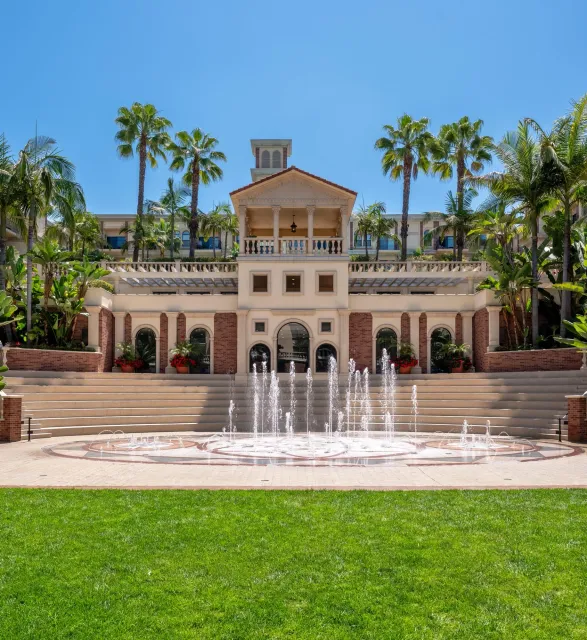
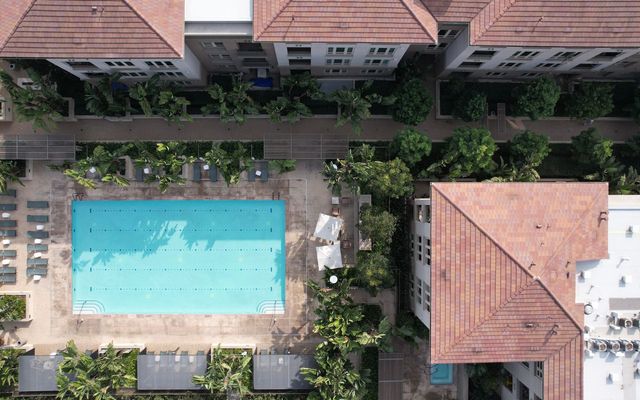
The Lorenzo stands out for students who want fitness to be part of a larger, social recreation package. Its listing describes a 24-hour fitness center with dedicated wellness areas, plus a basketball court, sand volleyball court, rock-climbing wall, pools, spas, and outdoor lounges. That variety may appeal to roommates with different exercise preferences: one person can use traditional gym equipment while another prioritizes court sports, climbing, or recovery time.
The current campus estimate is a seven-minute bike ride to Tommy Trojan, the shortest listed estimate among these five options. The property also advertises a complimentary private shuttle to USC. Having both a bike option and a property shuttle creates a useful backup plan when weather, a late class, or a heavy backpack changes the day.
The extensive amenity package also creates important tour questions. Ask which facilities are included, which hours apply to each one, and how crowded the fitness areas become. Confirm shuttle stops and schedules against your class times rather than treating “minutes from campus” as a guarantee. Students who want a quieter, simpler building may decide they do not need the broader social programming, while students seeking a recreation-centered community may see it as the main advantage.
1133 S Hope St: fitness and rooftop living downtown
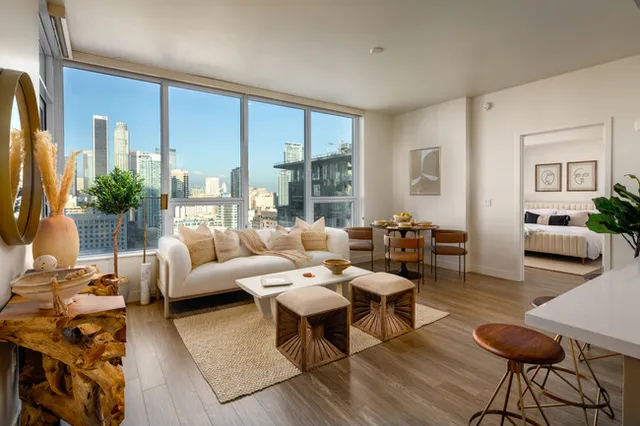
1133 S Hope St combines a fitness center with a rooftop terrace, lounge, parking, and on-site management in Downtown Los Angeles. Its mix may suit students who want their building to handle workouts, social space, and quiet breaks without requiring a separate trip. The listing describes studios as well as one- and two-bedroom apartments, so it can be relevant to solo renters and roommate groups.
The current estimate is a 12-minute bike ride to Tommy Trojan. That makes a bike-and-gym routine plausible: cycling can provide the commute portion of a workout, while the fitness room covers strength training or indoor sessions. Still, test the route at the time you expect to travel. Downtown traffic patterns, intersections, night visibility, bike parking, and the final approach to campus are all more important than a single estimated number.
During a tour, ask where bikes are stored and whether that area is controlled or weather-protected. Check how the rooftop and fitness center are separated from nearby apartments, especially if you are sensitive to noise. Because the listed rent range spans several unit types, compare the exact floor plan, required fees, and lease terms rather than relying on a property-wide starting figure.
The Nexen: a balanced amenity set for practical routines
The Nexen offers a fitness center alongside laundry facilities, a rooftop terrace, parking, and secure entry. This is a practical combination for students who want several recurring tasks covered at home. The listing includes studio, one-bedroom, and two-bedroom options, making it worth comparing for different household sizes.
Its current campus estimate is a 15-minute drive to Tommy Trojan. Driving time can vary substantially, so map a transit option as well and ask the leasing team what residents commonly use. If you bring a car, confirm the monthly parking cost, whether a space is guaranteed, and how guest parking works. If you do not drive, proximity to public transportation may matter more than the parking amenity.
For the fitness center, look beyond the phrase “well-equipped.” Ask to see the exact machines and weight range, and visit near the hour you would usually work out. The combination of gym and shared laundry can be efficient, but only if both have enough capacity. Ask how many washers and dryers serve the building, whether payment is app-based or coin-operated, and whether the laundry and fitness rooms have compatible hours. Secure entry is another useful feature to examine in person: learn how residents, deliveries, and guests enter rather than assuming every access point works the same way.
The Flat: bike storage, in-unit laundry, and a fitness center
The Flat has one of the most complementary amenity combinations in this group. The listing pairs a fitness center with secure bike storage, a rooftop terrace, and in-unit laundry in studio and one-bedroom apartments. For a student trying to keep exercise, commuting, and chores compact, that package can reduce the number of separate stops in a typical week.
The current estimate is a 10-minute drive to Tommy Trojan. The listing also notes nearby public transportation, but you should test the specific connection to your usual campus destination. A route that looks short on a map may involve a transfer or a longer walk at one end. Bike storage is valuable only when its access and capacity fit your needs, so ask whether spaces are assigned, whether a lock is required, and whether residents can bring bikes through elevators or hallways.
In-unit laundry can be especially useful for frequent workout clothes, but verify that the machines are actually included in the floor plan you are considering. In the gym, inspect the equipment mix and available floor area. Smaller apartment communities sometimes have compact fitness rooms that work well off-peak but feel limited during busy hours. This option makes the strongest case for someone who values an integrated routine over a resort-scale recreation program.
Kanvas: fitness plus study and transit-oriented flexibility
Kanvas may suit students who want to place studying and transportation on equal footing with exercise. Its listing describes a fitness center, study lounges, communal areas, outdoor space, and access to public transportation. Studio and one-bedroom options are listed, which may appeal to students who prefer a smaller household or want their own study environment.
The current estimate is a 15-minute drive to Tommy Trojan. Because transit access is part of the property description, compare the actual stop, service frequency, transfer count, and evening schedule with driving or biking. A reliable transit route can be more useful than a nominally faster drive when parking and traffic are considered, but that depends entirely on your timetable.
Tour both the gym and study spaces during a realistic busy period. If they share a wall or corridor, listen for equipment noise. Ask whether study rooms can be reserved, whether the fitness center has access limits, and whether either space closes for cleaning. Kanvas is less about stacking many recreation amenities and more about supporting a day that moves between class, focused work, exercise, and home. Students still building a wider shortlist can browse the full USC apartment directory after comparing these five.
Neighborhood and commute planning around USC
These properties span different parts of Los Angeles, so commute planning should be part of the lease decision, not an afterthought. The Lorenzo has the shortest listed bike estimate in this group and advertises a private shuttle. 1133 S Hope St has a downtown location and a 12-minute bike estimate. The Flat has a 10-minute drive estimate, while The Nexen and Kanvas each show a 15-minute drive estimate. Estimates are useful comparison points, not promises.
Build a commute test around the building entrance, your most frequent USC destination, and your likely travel time. Check morning and evening conditions on separate days. Include time to lock a bike, wait for a shuttle, park, or walk from a transit stop. If you exercise before class, also consider whether you will return home to shower or use campus facilities; that choice can change the value of an apartment fitness center.
Neighborhood fit extends beyond transportation. Walk the immediate blocks and locate groceries, pharmacies, late-night food, and a comfortable waiting place for rides. Ask roommates how often they expect to drive, host guests, or use shared amenities. For another perspective on evaluating workout access as part of student life, see this USC fitness-center apartment guide.
FAQ
Are apartment fitness centers near USC usually included in rent?
Not always. Access may be bundled into rent or covered by a separate amenity, resident-services, or technology fee. Ask for a written list of recurring and one-time charges, and confirm that every person on the lease receives access.
What should I inspect in a fitness center during a tour?
Check the equipment you personally use, not just the room’s appearance. Look at machine condition, free-weight range, benches, open floor space, ventilation, cleaning supplies, water access, posted hours, and signs of crowding. Ask when equipment was last serviced.
Is a 24-hour gym automatically the best choice for students?
No. Extended hours help only if the equipment, location, noise level, and access rules suit your routine. A smaller gym with the right machines may be more useful than a large facility you rarely visit. Also ask whether all sections remain open overnight.
How should I compare a fitness center with commute time?
Estimate the door-to-door minutes you save by exercising at home, then subtract the time added by your campus commute. Test routes during class hours and include parking, transfers, shuttle waits, or bike-locking time. The best balance is personal rather than universal.
Can listing details and commute estimates change?
Yes. Availability, rents, fees, equipment, amenity hours, shuttle schedules, and travel conditions can all change. Verify the exact unit and current policies with the property, and test your route before signing.
Choose the routine, then the apartment
A fitness center has real value when it removes friction from your week. Shortlist the communities whose commute and supporting amenities match your habits, tour the actual workout space, and compare all required costs. The best USC apartment gym is not necessarily the biggest one; it is the one you can use consistently without making the rest of student life harder.
Apartments mentioned
Live listings featured in this guide near usc.